The Psychology of Getting Paid: Invoice Tricks That Actually Work
Getting clients to pay on time is 50% psychology, 50% good systems. Here are the invoicing tricks that freelancers and small businesses swear by.
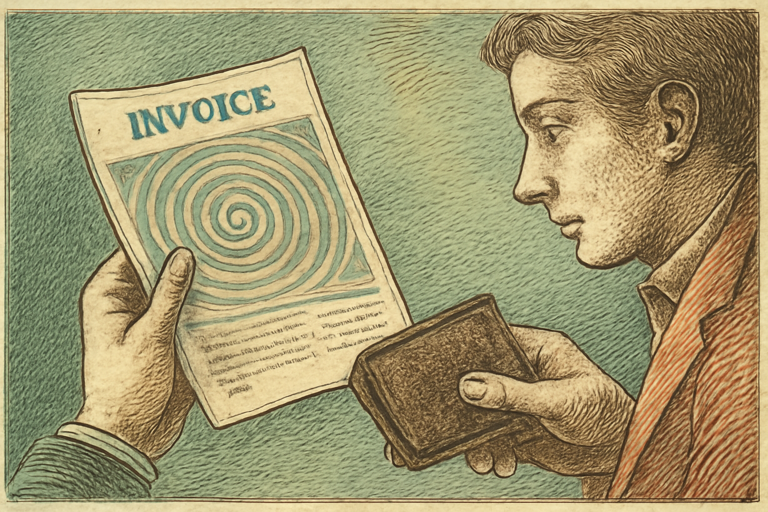
You did the work. You sent the invoice. And now you’re refreshing your bank account like it’s a social media feed, waiting for the money to appear.
Getting paid on time isn’t just about sending an invoice. It’s about how you send it, when you send it, and what psychological triggers make people prioritize your payment.
The “Due Upon Receipt” Trick
“Due in 30 days” gives people permission to wait 30 days (and then “forget” for another 15). “Due upon receipt” sets the expectation that this should be paid now. Studies show invoices with shorter payment terms get paid faster, because the urgency is built in.
The Specific Amount Effect
$2,000.00 looks like an estimate. $2,147.50 looks like you calculated the exact amount for the work done. Oddly specific amounts feel more legitimate and are questioned less often. This is real psychology research, not just vibes.
The “Amount in Words” Move
Adding the amount in words (“Two Thousand One Hundred Forty-Seven Dollars and Fifty Cents”) adds formality and legitimacy. It’s what banks do on checks. It signals “this is a serious financial document.” Use the invoice amount in words tool to convert any number to its written form.
The Send-It-Immediately Rule
Send your invoice the moment the work is done. Not “later today.” Not “tomorrow.” Immediately. The longer you wait, the more the urgency fades. The client moves on to other things. Your invoice becomes a to-do item instead of a priority.
The QR Code Payment Shortcut
Include a QR code on your invoice that links directly to your payment page (PayPal, Stripe, bank transfer link). The easier you make it to pay, the faster it happens. Generate one with the QR code generator.
Every click between “I should pay this” and “I paid this” is a chance for the client to get distracted. Remove every click you can.
The Professional Invoice Layout
A sloppy invoice signals “amateur.” A clean, numbered, well-formatted invoice signals “professional who has systems.” Use the invoice PDF generator to create invoices that look like you have an accounting department.
Your invoice should include:
- Your business name and contact info
- Client’s info
- Invoice number (sequential: INV-001, INV-002)
- Date issued
- Due date
- Line items with descriptions
- Total amount
- Payment instructions
- Late payment terms
The Gentle Follow-Up Schedule
- Day 1: Send invoice immediately after work completion
- Day 3: Quick “just confirming you received the invoice” email
- Day 7 (if unpaid): “Friendly reminder” with the invoice attached again
- Day 14: “Following up on invoice #XXX” with a firmer tone
- Day 30: “This invoice is now overdue. Please arrange payment by [date].”
Set a countdown timer to track payment deadlines so you follow up on schedule, not randomly when you remember.
The Late Fee Signal
Include late fee terms on every invoice, even if you never enforce them. “A 1.5% monthly late fee applies to overdue balances” changes behavior. People pay invoices with consequences first.
The Bottom Line
Getting paid isn’t about being aggressive. It’s about being systematic, professional, and making payment as frictionless as possible. Good invoices, clear terms, easy payment methods, and consistent follow-ups. That’s the formula.
Your work has value. Make sure your invoicing reflects that.